

本文深入解析JavaScript中的装饰设计模式,阐述其作为动态添加对象功能的技术手段,如何以关联关系替代继承来避免类型膨胀。通过接口定义、基础对象类、装饰器基类及具体装饰类的代码示例,展示如何在运行时灵活扩展对象职责,提供比传统继承更具弹性的解决方案。
装饰设计模式概述
装饰设计模式
每种设计模式都有其特定的应用场景与解决路径。装饰设计模式的核心在于动态地为对象附加新功能,它提供了一种替代继承的技术路径。无需通过创建子类即可扩展对象的新功能,该模式利用对象间的关联关系取代继承关系,从而具备更高的灵活性,并有效避免了类型体系的快速膨胀。当新增功能尚不足以通过继承方式解决时,采用此模式更为适宜,即避免杀鸡用宰牛刀式的过度设计。简而言之,装饰设计模式旨在动态地为对象添加额外职责,若需扩展对象功能,装饰者提供了比继承更具弹性的替代方案。
装饰设计模式结构
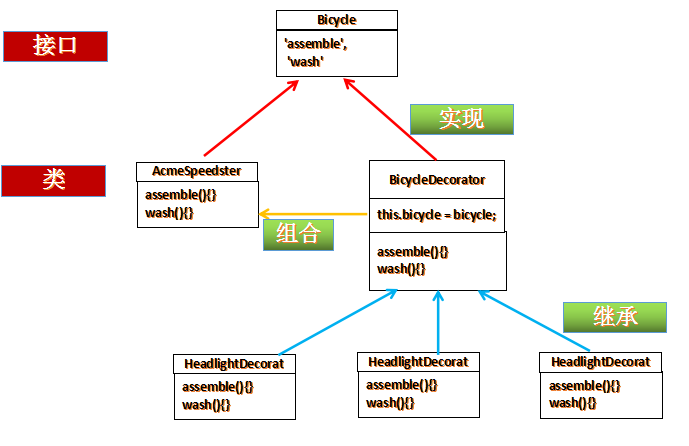
结构图:
接口定义
接口
var Bicycle = new Interface('Bicycle', ['assemble', 'wash', 'repair', 'getPrice']);基础对象类实现
对象类
var AcmeComfortCuiser = function(){

};
AcmeComfortCuiser.prototype = {
  assemble: function(){

  },
  wash: function(){

  },
  repair: function(){

  },
  getPrice: function(){

  }
}
装饰器基类构建
装饰类
var BicycleDecorator = function(bicycle){
  Interface.ensureImplements(bicycle, Bicycle);
  this.bicycle = bicycle;
};
BicycleDecorator.prototype = {
  assemble: function(){
    return this.bicycle.assemble();
  },
  wash: function(){
    return this.bicycle.wash();
  },
  repair: function(){
    return this.bicycle.repair();
  },
  getPrice: function(){
    return this.bicycle.getPrice();
  }
}
具体装饰类扩展
拓展类
  var HeadlightDecorator = function(bicycle){
    BicycleDecorator.call(this, bicycle);
  };
  extend(HeadlightDecorator, BicycleDecorator);
  HeadlightDecorator.prototype.getPrice = function(){
    return this.bicycle.getPrice() + 15.00;
  }