

本文深入解析JavaScript中栈、队列及优先队列的实现原理。通过代码示例展示栈的后进先出特性及其在进制转换中的应用,队列的先进先出机制及其在树形结构广度优先搜索(BFS)中的使用。此外,还探讨了基于线性结构和二叉堆(Max/Min Heap)的优先队列实现,并结合React Scheduler源码解析小顶堆在任务调度中的实际落地。
前言
在实际开发中,数组是我们最熟悉的数据结构,通常足以应对大多数场景。然而,面对更复杂的业务逻辑时,数组往往显得力不从心。选择合适的合适数据结构是解决复杂问题的前提,因此深入理解并掌握数据结构对于提升开发效率至关重要。
本文将重点梳理两种在实际开发中高频使用的数据结构,通过简明扼要的说明与示例,希望能对读者有所帮助。
栈(stack)
栈是一种抽象数据结构,其核心特征为“后进先出”(Last-in-First-Out,简称LIFO)。
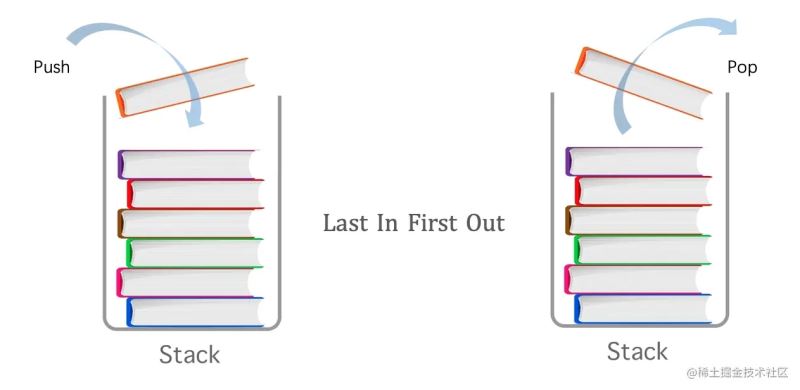
理解栈的结构,可以联想生活中的场景:一摞盘子或装满子弹的弹夹。在软件应用中,浏览器的“后退”与“前进”功能便是典型例子:点击“后退”时,当前页面(栈顶)被弹出,返回至之前的页面。此外,IDE、Word、PhotoShop等编辑软件的“撤销”(undo)功能,其底层原理也是基于栈实现的,尽管具体代码实现各异,但核心逻辑一致。
得益于LIFO特性,栈仅允许操作栈顶元素,非栈顶元素无法直接访问。若要访问深层元素,必须先移除其上方的所有元素。这种限制使得栈成为一种高效且结构清晰的数据结构。
在JavaScript中实现栈,通常可直接利用数组进行封装。
栈实现
一个标准的栈数据结构需具备以下核心功能:
- push:插入新元素,并将其设为栈顶。
- pop:移除并返回栈顶元素。
- peek:查看栈顶元素但不将其移除,属于辅助方法。
- clear:清空栈内所有元素。
- isEmpty:判断栈是否为空,为空返回true,否则返回false。
- size:返回栈中元素的总数量。
class Stack {
    constructor() {
        this.items = [];
    }
    push(item) {
        this.items.push(item);
    }
    pop() {
        return this.items.pop();
    }
    peek() {
        return this.items[this.items.length - 1];
    }
    clear() {
        this.items = [];
    }
    isEmpty() {
        return this.items.length === 0;
    }
    size() {
        return this.items.length;
    }
}
const stack = new Stack();
stack.push('c++');
stack.push('swift');
stack.push('python');
stack.push('javascript');
console.log(stack.isEmpty()); // false
console.log(stack.size());    // 4
console.log(stack.peek());    // javascript
const removedItem = stack.pop();
console.log(removedItem);     // javascript
console.log(stack.peek());    // python
stack.clear();
console.log(stack.isEmpty()); // true
console.log(stack.size());    // 0
解决实际问题
栈在解决具体算法问题时有着广泛的应用,以下是一个典型示例。
十进制转二进制的转换逻辑如下:
function transitionToBin(decNumber) {
    const stack = new Stack();
    do {
        // 每次循环计算出的低位值,依次入栈
        stack.push(decNumber % 2);
        decNumber = Math.floor(decNumber / 2);
    } while(decNumber > 0);
    let result = '';
    // 此时,stack 中存放的是转换后二进制值,栈顶是高位,依次向下。
    while (stack.size() > 0) {
        // 从栈顶的高位依次出栈,拼接到显示结果中
        result += stack.pop();
    }
    return result;
}
const binNumber = transitionToBin(321);
console.log('binNumber: ', binNumber);
栈的其他应用场景
栈还广泛应用于内存管理中,用于保存变量及方法调用。函数执行时压栈,返回结果时出栈。递归(recursion)便是栈应用的经典案例。
例如,计算阶乘的递归实现如下:
function factorial(n) {
    return n > 1 ? n * factorial(n - 1) : n;
}
console.log(factorial(4));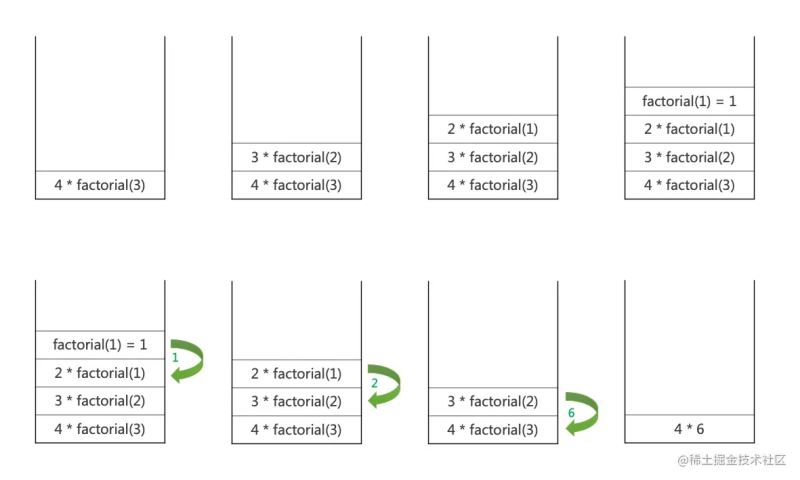
简单队列(Queue)
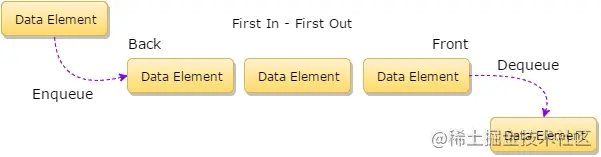
除栈外,队列也是开发中常用的数据结构。队列由顺序元素组成的线性结构,与栈的LIFO不同,队列遵循“先进先出”(First-In-First-Out,FIFO)原则。
队列的操作规则为:在队尾添加新元素,在队头移除元素。
现实生活中,最直观的队列例子便是排队等候。
在计算机领域,队列的应用同样广泛,例如CPU的作业调度(Job Scheduling)、外围设备的并发联机(spooling),以及树和图的广度优先搜索(BFS)。
队列实现
构建一个队列数据结构,主要需实现两个核心操作:
- enqueue:将新元素推入队列。
- dequeue:从队列中移除一个已有元素。
我们可以创建一个类来封装队列,利用JavaScript原生数组存储数据,并调用内置函数完成队列操作。
class Queue {
    constructor() {
        this.items = [];
    }
    // 推入
    enqueue(item) {
        this.items.push(item);
    }
    // 移除
    dequeue() {
        return this.items.shift();
    }
    // 队列头元素
    peek() {
        return this.items[0];
    }
    // 为空判断
    isEmpty() {
        return this.items.length === 0;
    }
    size() {
        return this.items.length;
    }
}
队列应用 - 树的广度优先搜索(breadth-first search,BFS)
在遍历树形结构时,既可以使用栈进行深度优先遍历,也可以利用队列进行广度优先遍历。假设存在如下树形数据结构,我们需要获取其所有节点的值。
const treeData = {
     node: {
         value: 12,
         children: [{
             value: 30,
             children: [{
                 value: 22,
                 children: null
             }, {
                 value: 10,
                 children: [{
                     value: 5,
                     children: null
                 }, {
                     value: 4,
                     children: null
                 }]
             }]
         }, {
             value: 6,
             children: [{
                 value: 8,
                 children: null
             }, {
                 value: 70,
                 children: null
             }]
         }]
     }
 };
使用队列进行广度优先遍历的代码及示意图如下:
function bfs(tree) {
    // 准备一个空的队列
    const queue = new Queue();
    queue.enqueue(tree);
    // 一个用于显示结果的数组
    const result = [];
    do {
        // 出队列
        let node = queue.dequeue();
        result.push(node.value);
        if (node.children && node.children.length > 0) {
            node.children.forEach(sub => {
                queue.enqueue(sub);
            });
        }
    } while (queue.size() > 0);
    // 显示遍历结果
    console.log('result:', result.join(', '));
}
bfs(treeData.node);
// result: 12, 30, 6, 22, 10, 8, 70, 5, 4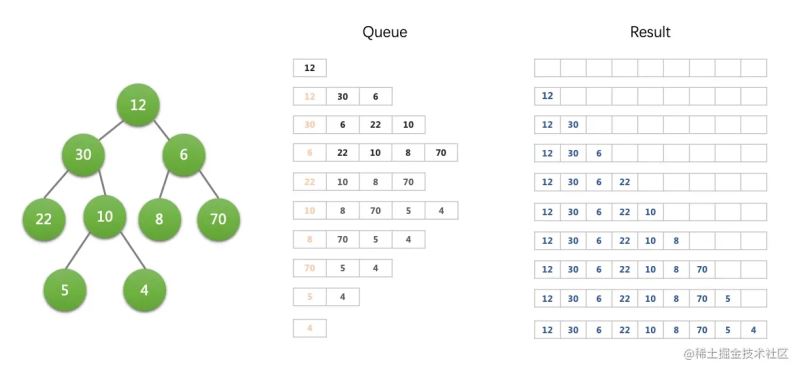
优先队列
在实际场景中,部分队列需要特殊的处理逻辑,出队规则并非简单的“先到先得”。例如:
- 医院分诊系统中,重症患者优先接受治疗。
- 商品销售场景中,可按进货价排序,优先销售进货价较高的商品。
由此产生了“优先队列”。它是普通队列的扩展,区别在于元素具有指定的优先级(或权重)。高优先级元素排在队列前端并优先出队。优先队列保留了普通队列的所有基本操作,但内部增加了排序机制。
优先队列实现
由于设置了优先级规则,我们可以采用顺序存储方式(如数组)而非链式存储来保存队列节点。
基于线性数据结构实现虽满足条件,但时间复杂度较高,并非最优方案。
线性数据结构实现优先队列
实现优先队列主要有两种思路:
- 第一种:插入时直接追加至队尾,移除时遍历队列查找符合优先级条件的元素进行移除。
- 第二种:插入时根据优先级找到合适位置插入,移除时直接从队头取出元素。
以下以第二种方式为例,实现一个优先队列:
class QItem {
    constructor(item, priority) {
        this.item = item;
        this.priority = priority;
    }
    toString() {
        return `${this.item} - ${this.priority}`;
    }
}
class PriorityQueue {
    constructor() {
        this.queues = [];
    }
    // 推入
    enqueue(item, priority) {
        const q = new QItem(item, priority);
        let contain = false;
        // 这个队列本身总是按照优先级,从大到小的
        // 所以找到第一个比要插入值小的那个位置
        for (let i = 0; i < this.queues.length; i++) {
            if (this.queues[i].priority < q.priority) {
                this.queues.splice(i, 0, q);
                contain = true;
                break;
            }
        }
        // 都比它大,放最后
        if (!contain) {
            this.queues.push(q);
        }
    }
    // 移除
    dequeue() {
        return this.queues.shift();
    }
    // 队列头元素
    peek() {
        return this.queues[0];
    }
    isEmpty() {
        return this.queues.length === 0;
    }
    size() {
        return this.queues.length;
    }
}
const queue = new PriorityQueue();
queue.enqueue('K40', 3100);
queue.enqueue('K50', 5000);
queue.enqueue('K10', 6100);
queue.enqueue('K10', 6000);
queue.enqueue('K10', 5600);
queue.enqueue('K50', 4600);
queue.enqueue('K40', 5900);
console.log(queue.dequeue());
console.log(queue.dequeue());
console.log(queue.dequeue());
console.log(queue.dequeue());
console.log(queue.dequeue());
console.log(queue.dequeue());
console.log(queue.dequeue());
/*
QItem { item: 'K10', priority: 6100 }
QItem { item: 'K10', priority: 6000 }
QItem { item: 'K40', priority: 5900 }
QItem { item: 'K10', priority: 5600 }
QItem { item: 'K50', priority: 5000 }
QItem { item: 'K50', priority: 4600 }
QItem { item: 'K40', priority: 3100 }
*/
Heap(堆)数据结构实现优先队列
上述线性结构实现了基础优先队列。我们还可以利用“堆”来实现,堆在数据存储上也是线性的,但元素位置遵循特定规则。
堆是一种能够快速从一组数据中找出最大值或最小值的数据结构。
堆是一种具有特殊特征的完全二叉树,也称为二叉堆。
二叉堆具备以下特点:
- 它是完全二叉树(complete binary tree)结构。所谓完全二叉树,指除底层叶子节点外,其他层均被填满,且底层叶子节点从左至右连续无空缺。这种结构使得二叉堆可以使用数组进行线性存储。
- 大顶堆(Max heap):父节点的值大于或等于子节点,堆顶元素为最大值。
- 小顶堆(Min heap):父节点的值小于或等于子节点,堆顶元素为最小值。
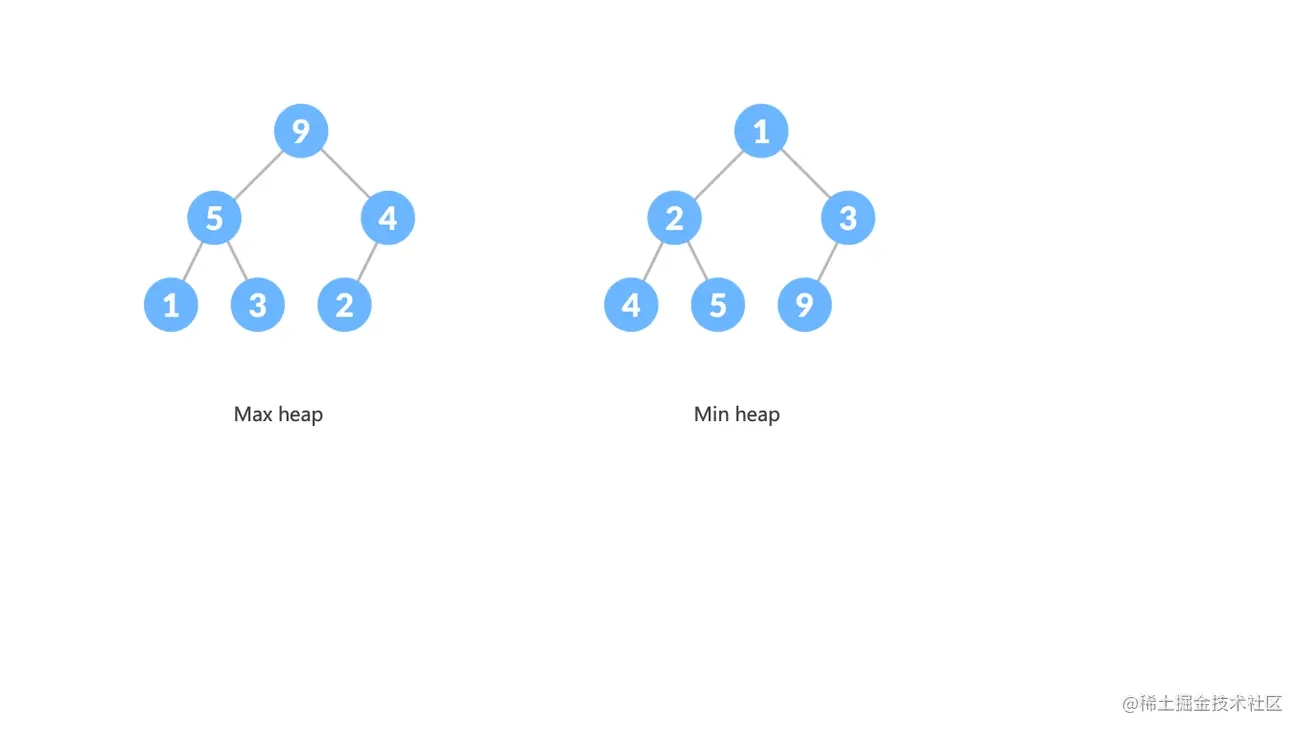
得益于完全二叉树的特性,我们可以直接使用数组来存储二叉堆。
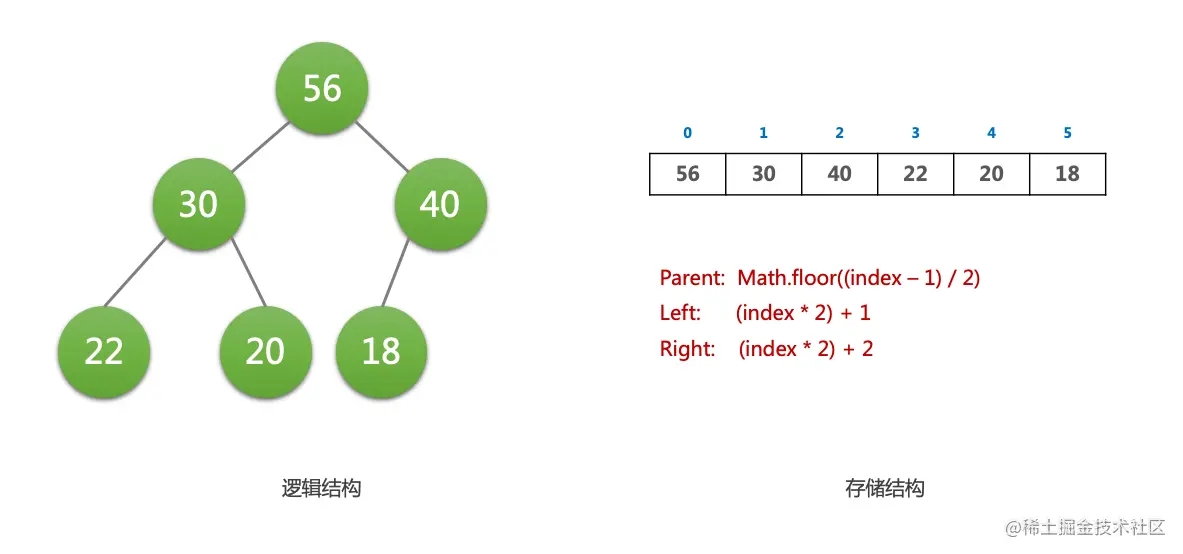
二叉堆是堆排序和优先队列的基础。其常见应用场景包括处理最大/最小值高效的优先队列,以及堆排序算法本身。
代码实现一个二叉堆
二叉堆的插入和删除操作较为复杂,此处以最大堆(max-heap)为例进行说明。
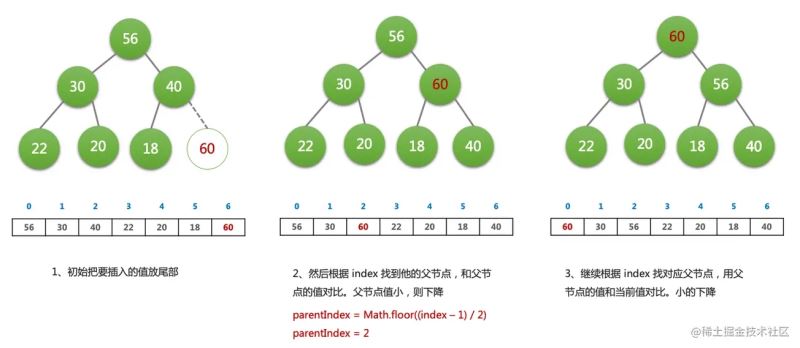
插入(enqueue)操作
- 新元素首先插入到堆的尾部。
- 随后依次向上调整堆的结构,直至根节点。
此过程称为HeapifyUp。
删除(dequeue)操作
- 取出顶部元素(因其始终为最大值)。
- 将尾部元素移至顶部(暂不考虑其大小关系)。
- 随后依次从根部向下调整堆的结构,直至堆尾。
此过程称为HeapifyDown。
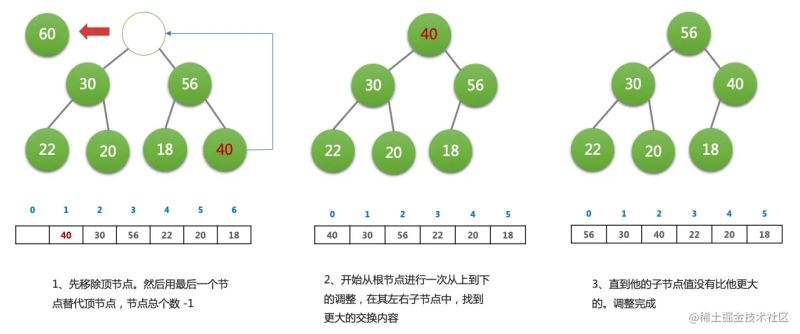
以下是一个max-heap的实现代码。修改comparator函数即可转换为min-heap。
class Heap {
    constructor(comparator = (a, b) => a - b) {
        this.arr = [];
        this.comparator = (iSource, iTarget) => {
            const value = comparator(this.arr[iSource], this.arr[iTarget]);
            if (Number.isNaN(value)) {
                throw new Error(`Comparator should evaluate to a number. Got ${value}!`);
            }
            return value;
        }
    }
    enqueue(val) {
        // 插入到末尾
        this.arr.push(val);
        // 向上冒泡,找到合适位置
        this.siftUp();
    }
    dequeue() {
        if (!this.size) return null;
        const val = this.arr.shift();
        const rep = this.arr.pop();
        this.arr.splice(0, 0, rep);
        this.siftDown();
    }
    get size() {
        return this.arr.length;
    }
    siftUp() {
        // 新元素索引
        let index = this.size - 1;
        // 根据完全二叉树的规则,这里我们可以依据元素索引index的值,获得他对应父节点的索引值
        const parent = (i) => Math.floor((i - 1) / 2);
        if (parent(index) >= 0 && this.comparator(parent(index), index) < 0) {
            // 如果父节点存在,并且对比值比当前值小,则交互位置
            this.swap(parent(index), index);
            index = parent(index);
        }
    }
    siftDown() {
        let curr = 0;
        const left = (i) => 2 * i + 1;
        const right = (i) => 2 * i + 2;
        const getTopChild = (i) => {
        // 如果右节点存在,并且右节点值比左节点值大
        return (right(i) < this.size && this.comparator(left(i), right(i)) < 0)
                ? right(i) : left(i);
    };
    // 左节点存在,并且当前节点的值,小于子节点中大的那个值,交换
    while (left(curr) < this.size && this.comparator(curr, getTopChild(curr)) < 0) {
        const next = getTopChild(curr);
        this.swap(curr, next);
        curr = next;
        }
    }
    // 交换位置
    swap(iFrom, iTo) {
        [this.arr[iFrom], this.arr[iTo]] = [this.arr[iTo], this.arr[iFrom]];
    }
}
const heap = new Heap();
heap.enqueue(56);
heap.enqueue(18);
heap.enqueue(20);
heap.enqueue(40);
heap.enqueue(30);
heap.enqueue(22);
console.log('heapify: ', heap.arr.join(', '));
heap.dequeue();
console.log('step 1: ', heap.arr.join(', '));
heap.dequeue();
console.log('step 2: ', heap.arr.join(', '));
heap.dequeue();
console.log('step 3: ', heap.arr.join(', '));
// heapify:  56, 40, 22, 18, 30, 20
// step 1:  40, 30, 22, 18, 20
// step 2:  30, 20, 22, 18
// step 3:  22, 20, 18
如代码所示,数据入队时无序,但出队时总能获取最大值,从而实现了优先队列的功能。
小顶堆在React Scheduler事务调度包中的应用
Scheduler包含两个队列:timerQueue(未就绪任务队列)和taskQueue(就绪任务队列)。当新任务注册时,会被push至timerQueue,并根据开始时间重新排列顺序。
push方法基于schedulerMinHeap.js文件中的最小堆(min-heap)实现,源码链接见前文。
export function push(heap: Heap, node: Node): void {
    const index = heap.length;
    heap.push(node);
    siftUp(heap, node, index);
}
代码中,push操作后调用了siftUp方法来重新整理顺序。
function siftUp(heap, node, i) {
    let index = i;
    while (index > 0) {
        const parentIndex = (index - 1) >>> 1;
        const parent = heap[parentIndex];
        if (compare(parent, node) > 0) {
            // The parent is larger. Swap positions.
            heap[parentIndex] = node;
            heap[index] = parent;
            index = parentIndex;
        } else {
            // The parent is smaller. Exit.
            return;
        }
    }
}
其中计算parentIndex使用了位移方法(等价于除以2取整),简洁高效。
最后
数据结构涵盖内容广泛,本文仅简要介绍了栈和队列,旨在引导读者探索更复杂的数据结构。真正掌握数据结构并将其应用于实际工作,对开发者至关重要。
到此关于JavaScript数据结构之栈和队列的文章介绍完毕,更多相关js栈和队列内容请搜索本站以前的文章或继续浏览下面的相关文章,希望大家以后多多支持本站!