

本文深入解析JavaScript中的原型模式与观察者模式。通过对比传统对象创建方式,阐述如何利用原型链共享属性和方法以降低内存占用并提升性能。同时介绍观察者模式在模块通信中的应用,通过事件订阅与发布机制实现组件解耦,提升代码可维护性。
1、原型模式
原型模式的核心在于创建对象时,通过共享某个对象原型的属性和方法,从而实现性能提升、内存占用降低以及代码复用的目标。
示例一
function Person(name) {
  this.name = name;

  this.config = {
    a: "1",
    b: "2",
  };

  this.hello = function () {
    console.info("hello");
  };
}
假设需要依据上述代码创建 100 个实例,这将导致生成 100 个 config 和 100 个 hello,且这两者在每个实例内部完全一致。
为此,我们可以提取公共代码来进行优化。
const config = {
  a: "1",
  b: "2",
};
const hello = function () {
  console.info("hello");
};
function Person(name) {
  this.name = name;

  this.config = config;

  this.hello = hello
}
这种方式确保无论创建多少个Person对象,都只需创建一个config和一个hello。然而,这种做法仍会污染全局变量、导致config被误修改、Person与其他代码耦合度较高,且不利于代码的扩展与维护。
因此,可以通过原型机制进行进一步优化。
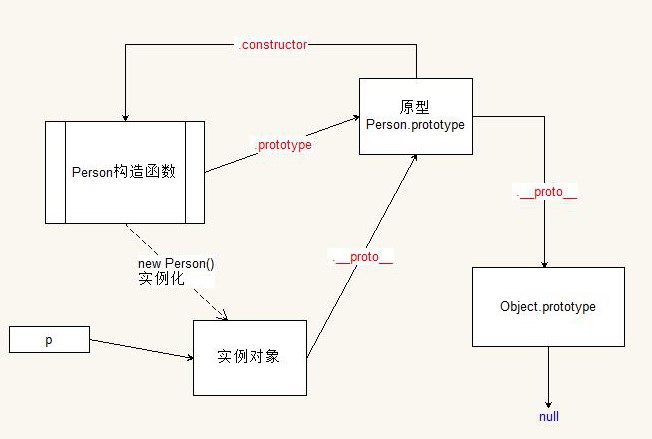
function Person() {}
var p = new Person();
该函数创建实例时的原型结构如下图所示:
示例二
function Person(name) {
  this.name = name;

  this.config = {
    a: "1",
    b: "2",
  };

  this.hello = function () {
    console.info("hello");
  };
}

//此方式会重写prototype,造成constructor丢失,变为Object()。
//可以使用Person.prototype.xx=yy的方式写,或者重新指定Person.prototype.constructor=Person
Person.prototype = {
  version: 1.0,
  say: function (arg) {
    console.info(`${this.name} say ${arg}`);
  },
  constructor: Person,
};
var p1 = new Person("p1");
var p2 = new Person("p2");

console.info(p1.config == p2.config); //false
console.info(p1.hello == p2.hello); //false
console.info(p1.say === p2.say); //true
p1.say("qq");
p2.say("qq");
console.info(p1.version === p2.version); //true
console.info(p1.version);
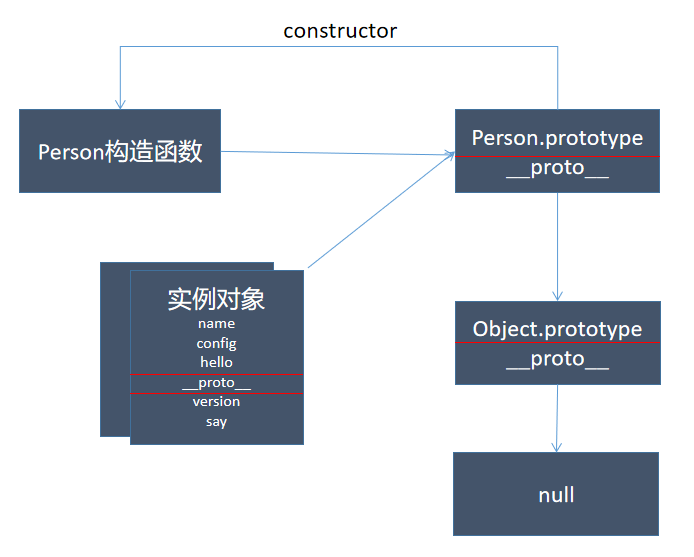
该函数创建实例时的原型结构如下图所示:
示例三
function Person(name) {
  this.name = name;

  this.config = {
    a: "1",
    b: "2",
  };

  this.hello = function () {
    console.info("hello");
  };
}

//此方式会重写prototype,造成constructor丢失,变为Object()
Person.prototype = {
  version: 1.0,
  say: function (arg) {
    console.info(`${this.name} say ${arg}`);
  },
};

function PersonA(name) {
  Person.call(this, name);
}
PersonA.prototype = Person.prototype;

function PersonB(name) {
  Person.call(this, name);
}
PersonB.prototype = Person.prototype;
var pA = new PersonA("pa");
var pB = new PersonB("pb");

console.info(pA.config == pB.config); //false  内部属性比较
console.info(pA.hello == pB.hello); //false  内部属性比较
console.info(pA.say === pB.say); //true  原型方法共享
pA.say("qq");
pB.say("qq");
console.info(pA.version === pB.version); //true  原型属性共享
console.info(pA.version); //1.0
Person.prototype.version = 2.0; //修改原型共享属性
console.info(pB.version); //2.0
console.info(new Person().version); //2.0

//修改原型共享方法
PersonB.prototype.say = function (arg) {
  console.info(`v2--- ${this.name} say ${arg}`);
};
pB.say("qq");
new Person("Person").say("ww");
总结:
在JavaScript中创建对象较为消耗内存且耗时较长,通过减少内部属性的创建可以有效降低内存占用。
原型模式正是利用
javascript语言的原型特性来共享相同属性,从而达到降低内存占用、提高对象创建效率的目的。
2、观察者模式
观察者模式主要用于模块和组件之间的通信,通过提供统一的模式进行事件订阅和事件发布,从而实现模块与组件之间的解耦,提高代码的可维护性。
模块之间、组件之间通讯方式
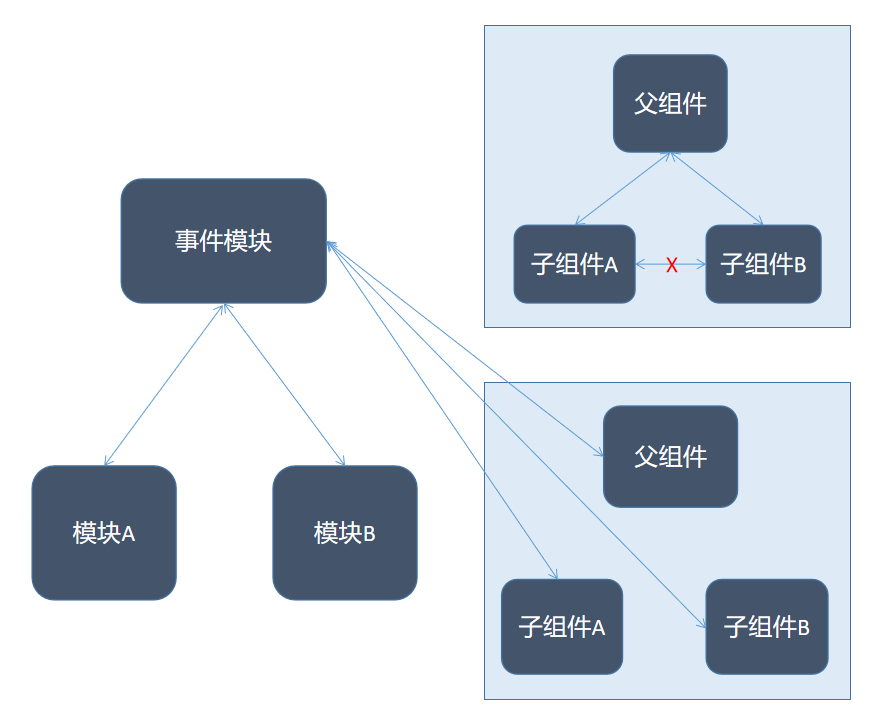
模块之间、组件之间采用直接引用通讯方式
const moduleA = {
  say: function (msg) {
    console.info("A say " + msg);
  },

  letBrun: function () {
    //直接引用了moduleB
    moduleB.run();
  },
};

const moduleB = {
  run: function () {
    console.info("B run ");
  },

  letAsay: function () {
    //直接引用了moduleA
    moduleA.say("hello");
  },
};

moduleA.letBrun(); //B Run
moduleB.letAsay(); //A say hello
模块之间、组件之间采用父组件通讯方式
const moduleA = {
  say: function (msg) {
    console.info("A say " + msg);
  },
};

const moduleB = {
  run: function () {
    console.info("B run ");
  },
};

const parentModule = {
  moduleA,
  moduleB,

  letBrun: function () {
    this.moduleB.run();
  },

  letAsay: function () {
    this.moduleA.say("hello");
  },
};

parentModule.letBrun(); //B Run
parentModule.letAsay(); //A say hello
事件模块实现通讯
function Emitter() {
  this.events = {};
  this.res_oldAction = {}
  this.res_action_events = {}
}

//订阅资源
Emitter.prototype.subscribe = function (res, action, fn) {
  if(!this.res_oldAction[res.name]){
 this.res_oldAction[res.name] = res[action]
 res[action] = (data) => {
      this.res_oldAction[res.name](data)
   const fns = this.res_action_events[res.name].action;
      for (let i = 0; i < fns.length; i++) {
        fns[i](data);
      }
    }
  }

  if(!this.res_action_events[res.name]){
 this.res_action_events[res.name] = {}
  }

  if(!this.res_action_events[res.name][action]){
 this.res_action_events[res.name][action] = []
  }

  this.res_action_events[res.name].action.push(fn)
}

//取消订阅资源
Emitter.prototype.unsubscribe = function (res, action, fn) {
  const fns = this.res_action_events[res.name].action;
  for (let i = 0; i < fns.length; i++) {
 if (fns[i] === fn) {
   fns.splice(i, 1);
   i--;
 }
  }
}

Emitter.prototype.on = function (name, fn) {
  if (!this.events[name]) {
    this.events[name] = [];
  }

  this.events[name].push(fn);
};

Emitter.prototype.remove = function (name, fn) {
  if (!this.events[name]) {
    return;
  }

  const fns = this.events[name];

  for (let i = 0; i < fns.length; i++) {
    if (fns[i] === fn) {
      fns.splice(i, 1);
      i--;
    }
  }
};

Emitter.prototype.fire = function (name, data) {
  if (!this.events[name]) {
    return;
  }

  const fns = this.events[name];

  for (let i = 0; i < fns.length; i++) {
    fns[i](data);
  }
};

const emitter = new Emitter();

//模块A中注册事件
const methodA = (data) => {
  console.info("模块A接受到food消息:");
  console.info(data);
};

emitter.on("food", methodA);

//模块B中注册事件
const methodB = (data) => {
  console.info("模块B接受到food消息:");
  console.info(data);
};
emitter.on("food", methodB);

//模块C中触发事件
emitter.fire("food", "饭来了");

//模块B中移除事件
emitter.remove("food", methodB);

//模块C中再次触发事件
emitter.fire("food", "饭又来了");
执行结果如下:
模块 A 接受到 food 消息:
饭来了
模块 B 接受到 food 消息:
饭来了
模块 A 接受到 food 消息:
饭又来了
总结:
JavaScript 组件模块的通讯方式通常分为三种(直接通讯、通过父组件通讯、通过事件模块通讯)。观察者模式用于模块、组件之间通讯,通过提供统一的模式进行事件订阅、事件发布,从而达到模块、组件之间解耦,提高代码的可维护性。
到此这篇关于Javascript设计模式之原型模式详细的文章就介绍到这了,更多相关Javascript原型模式内容请搜索本站以前的文章或继续浏览下面的相关文章希望大家以后多多支持本站!